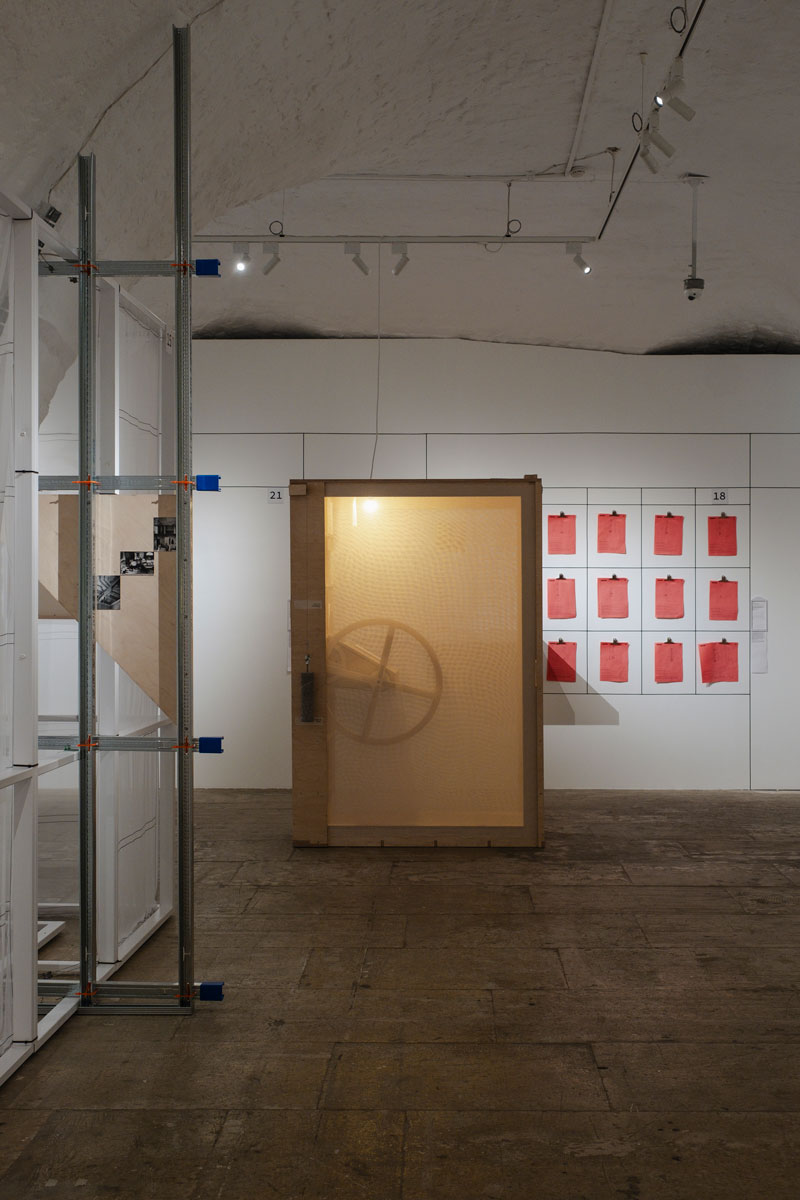
A group exhibition developed as part of Time Does Not Exist laboratory at the Shchusev Museum of Architecture. The project focused on the museum’s collections and storage holdings, approaches to working with the collection and individual objects, and the interpretation of the narratives embedded in particular exhibits.
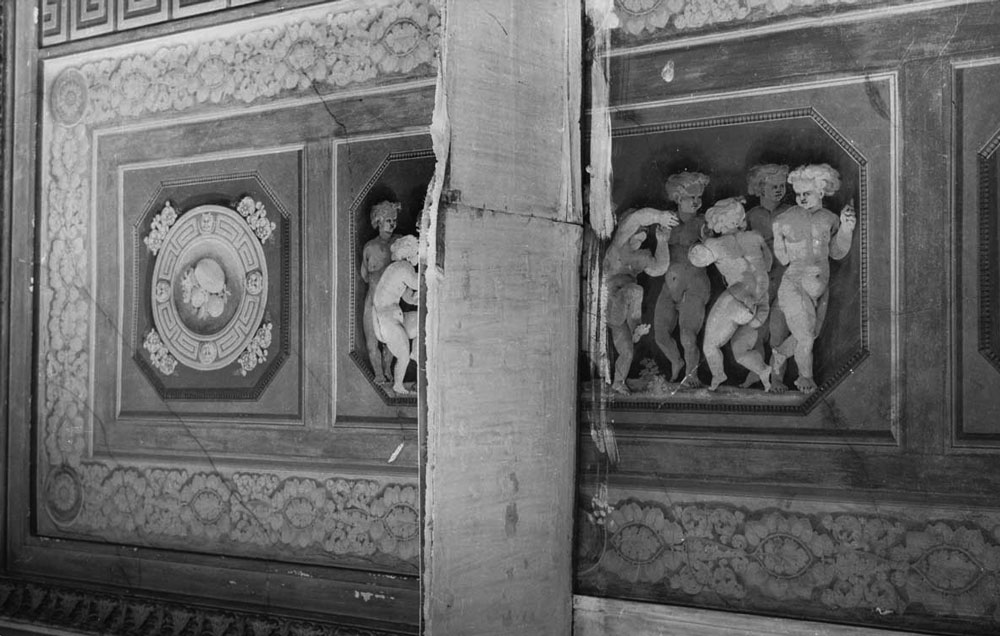
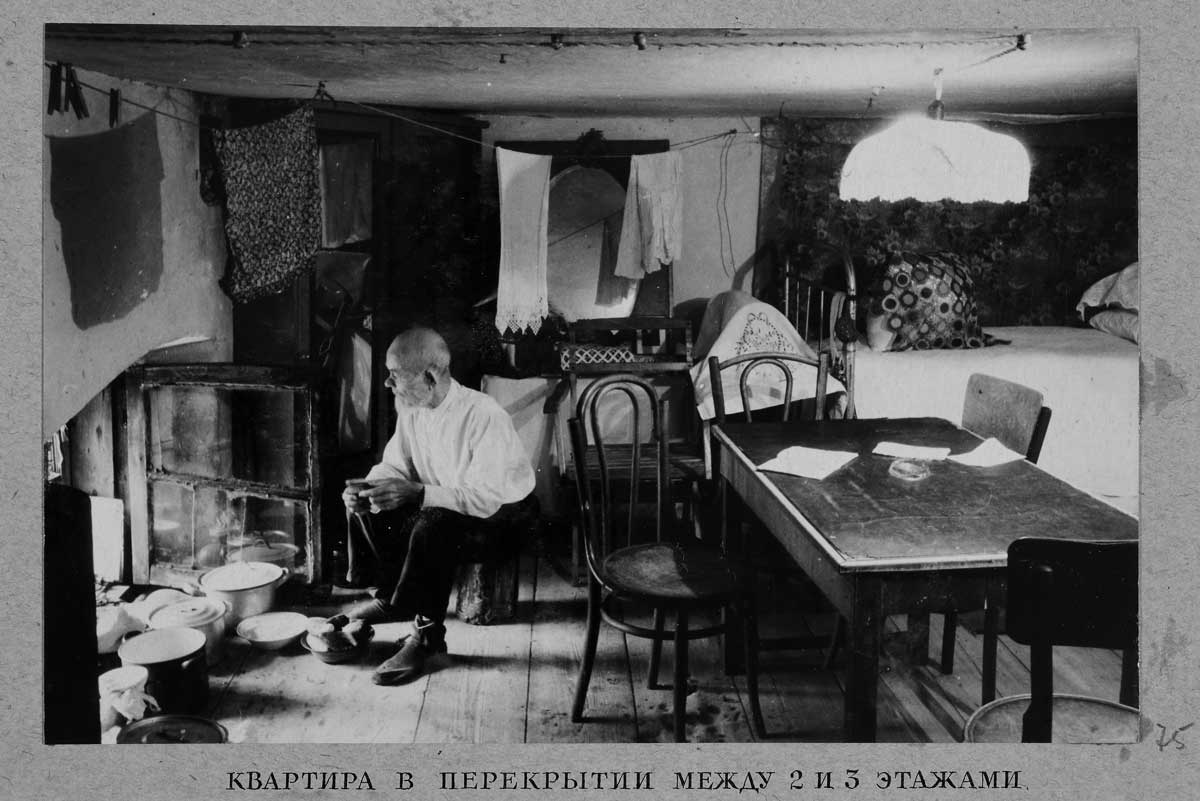
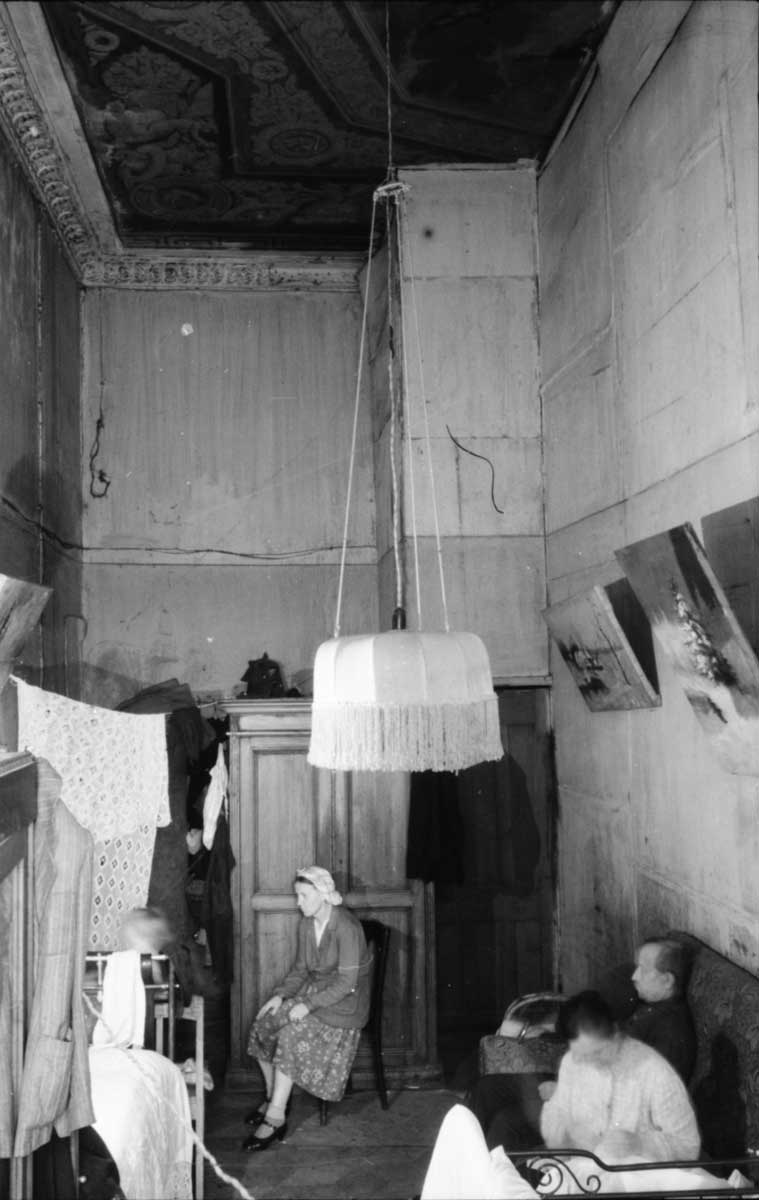
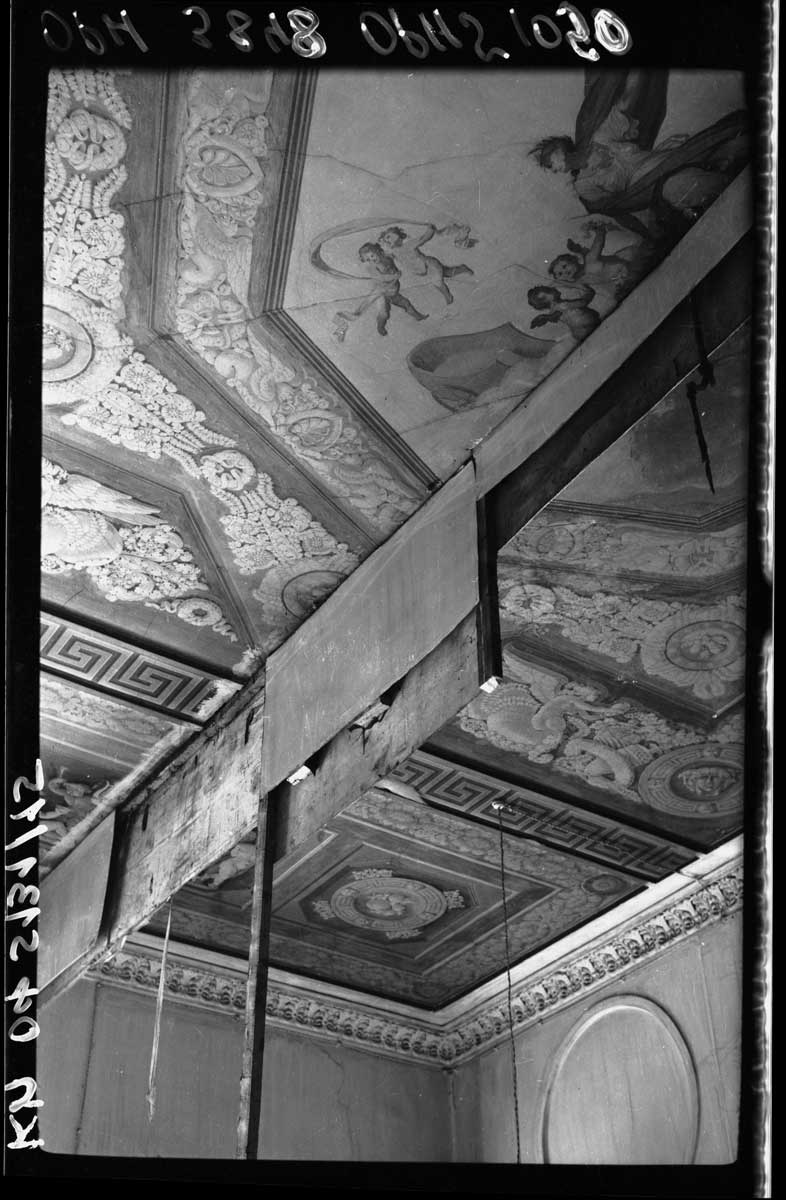
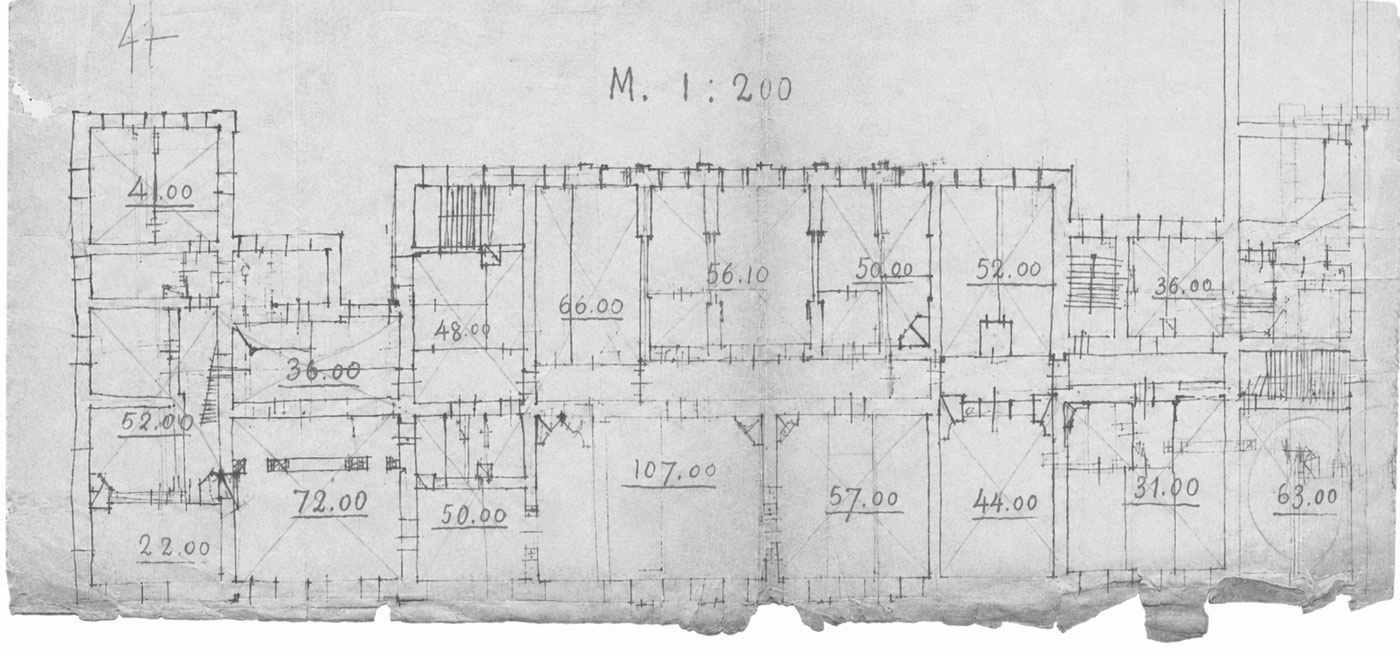
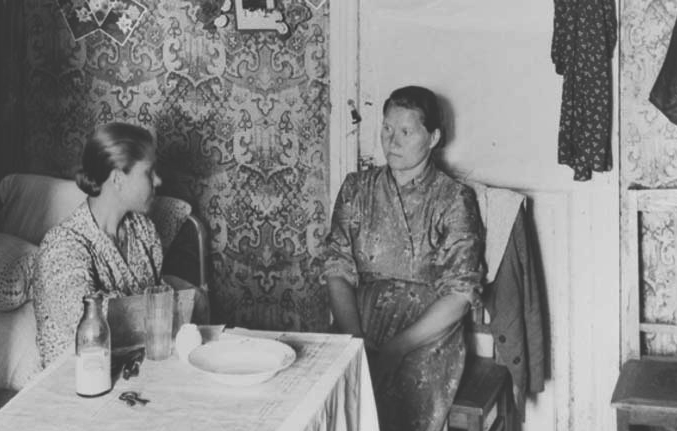
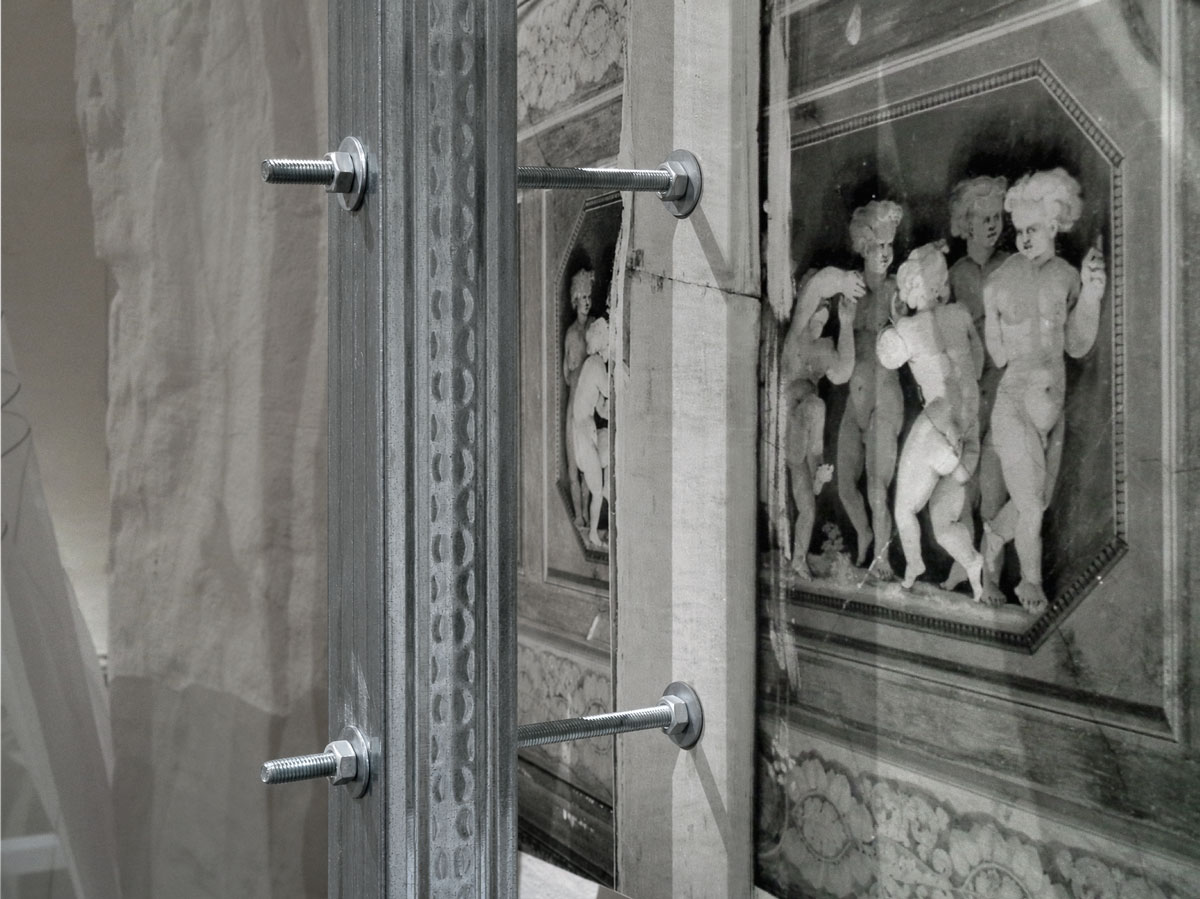
Our field of research centred on archival photographs of the interiors of the Neoclassical mansion shortly before it became home to the first Soviet Museum of Architecture. In these images, the imposing enfilades of the former mansion had been subdivided with partitions walls into tiny cells of communal apartments, occupied by ordinary inhabitants.
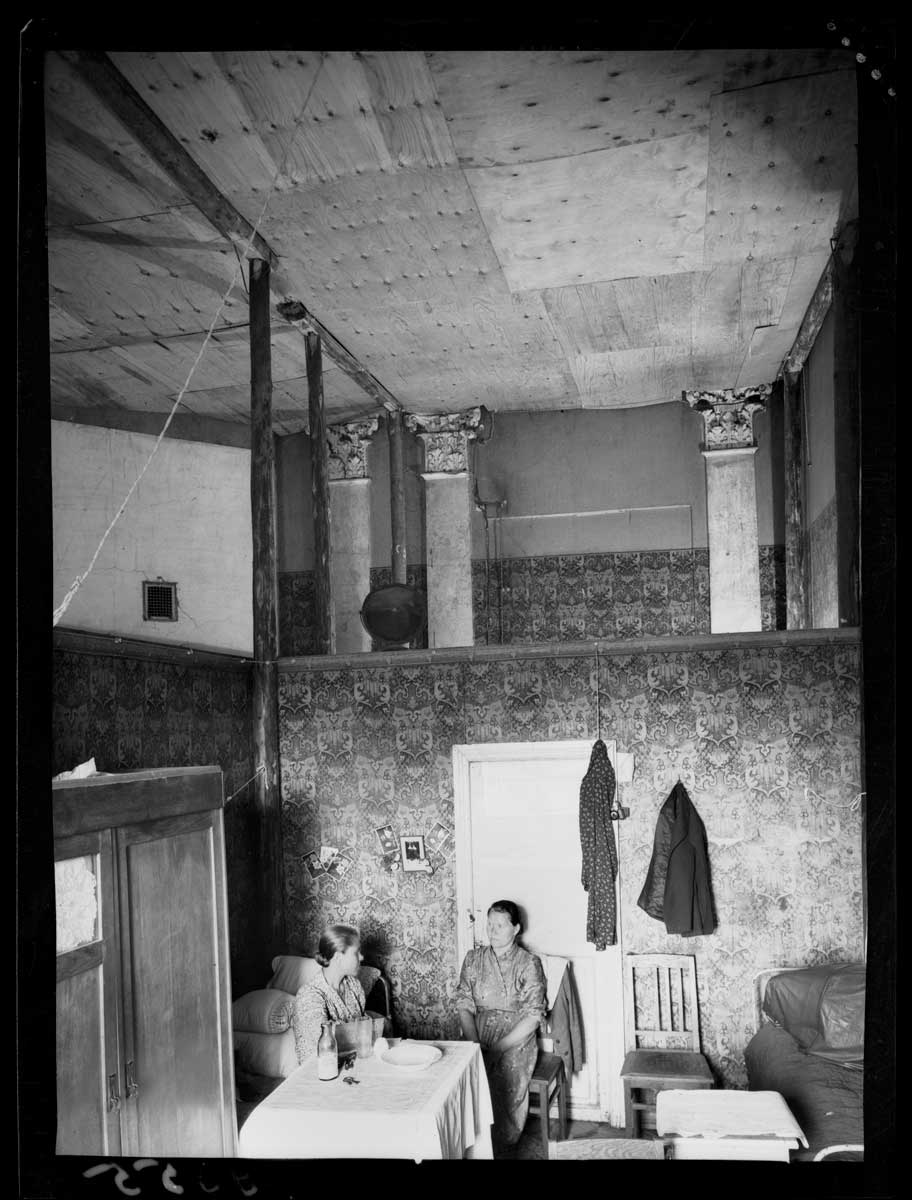
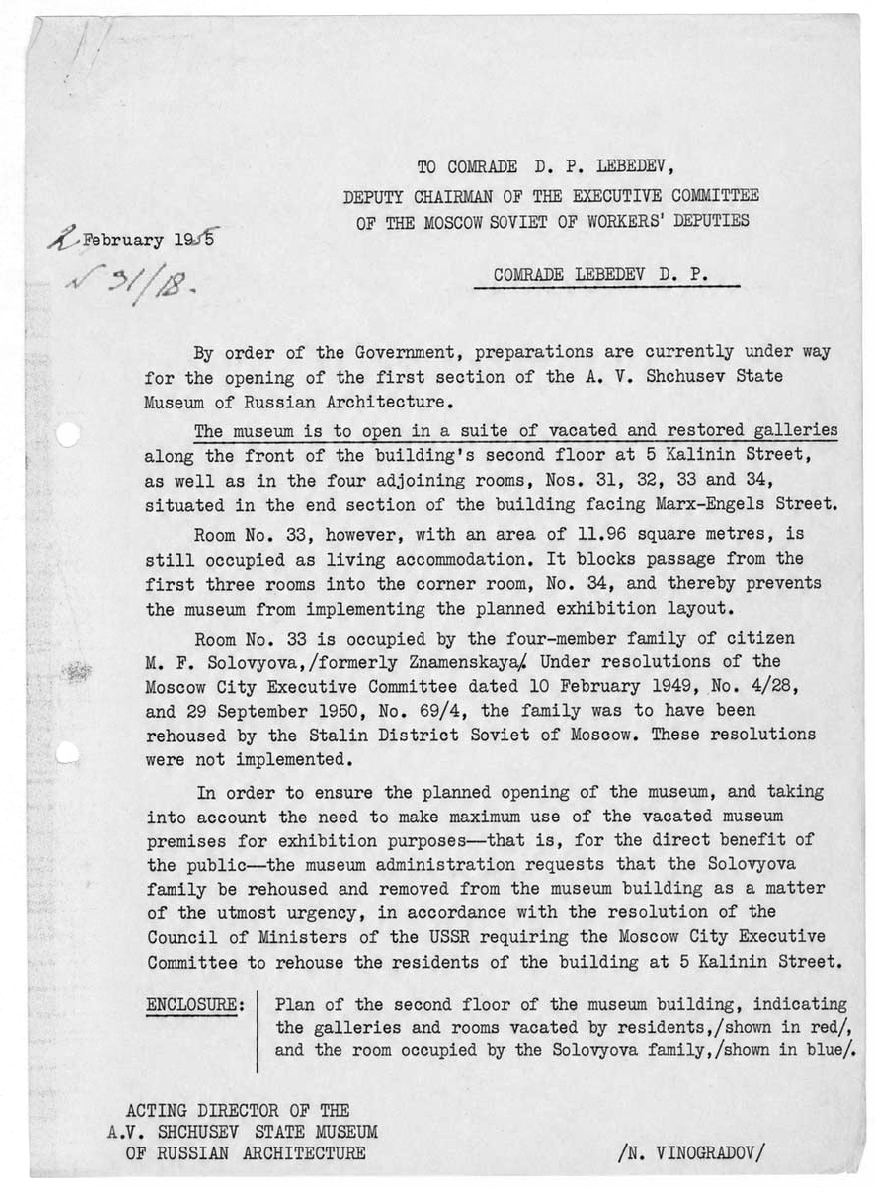
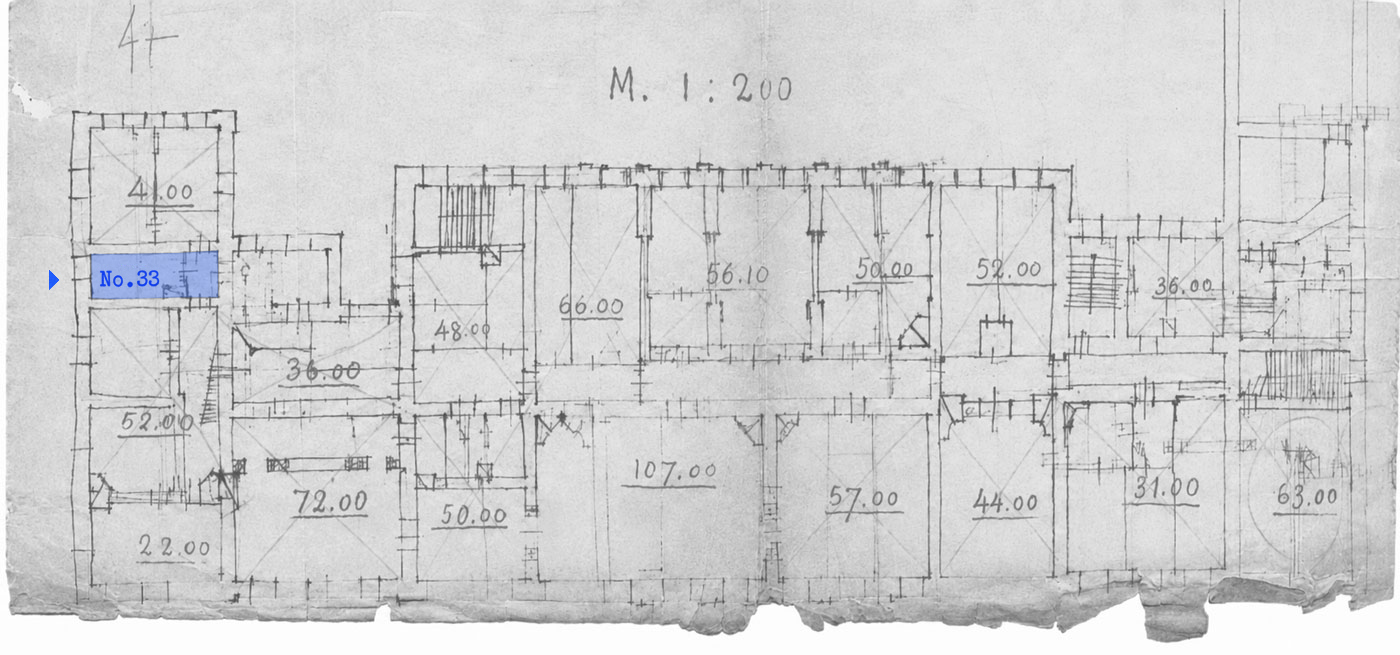
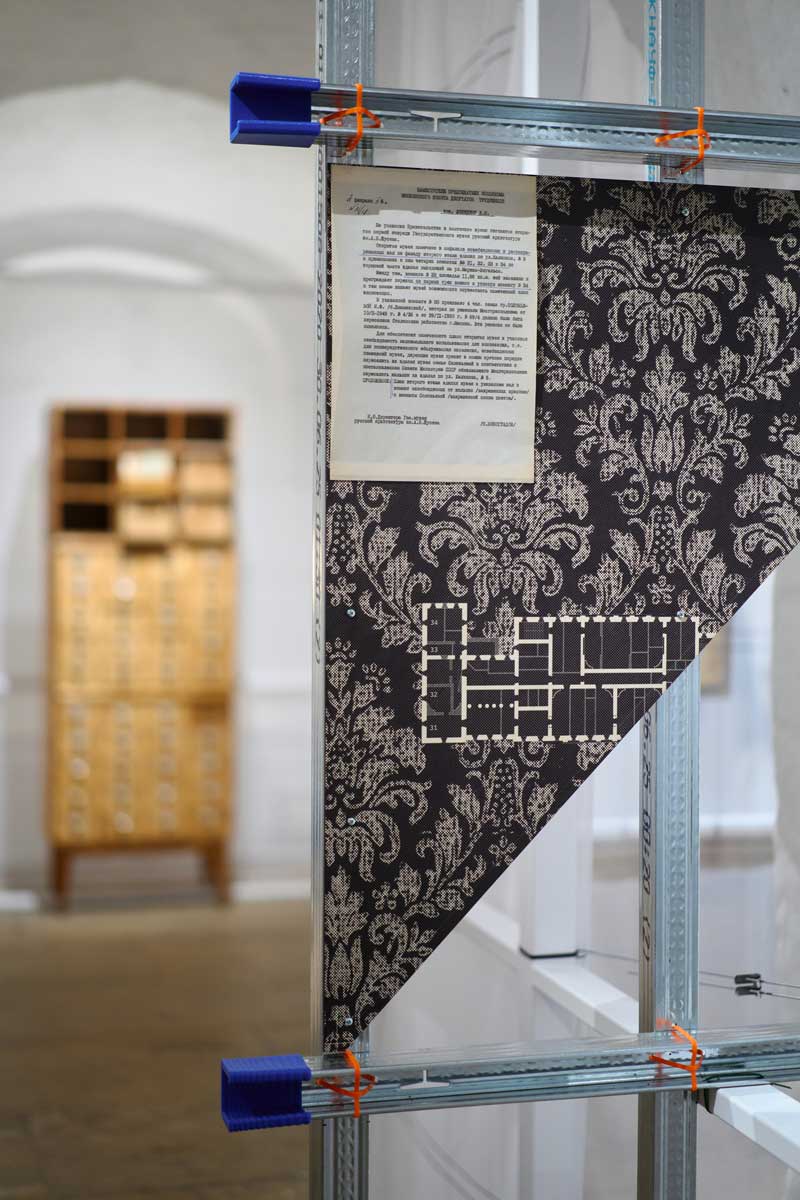
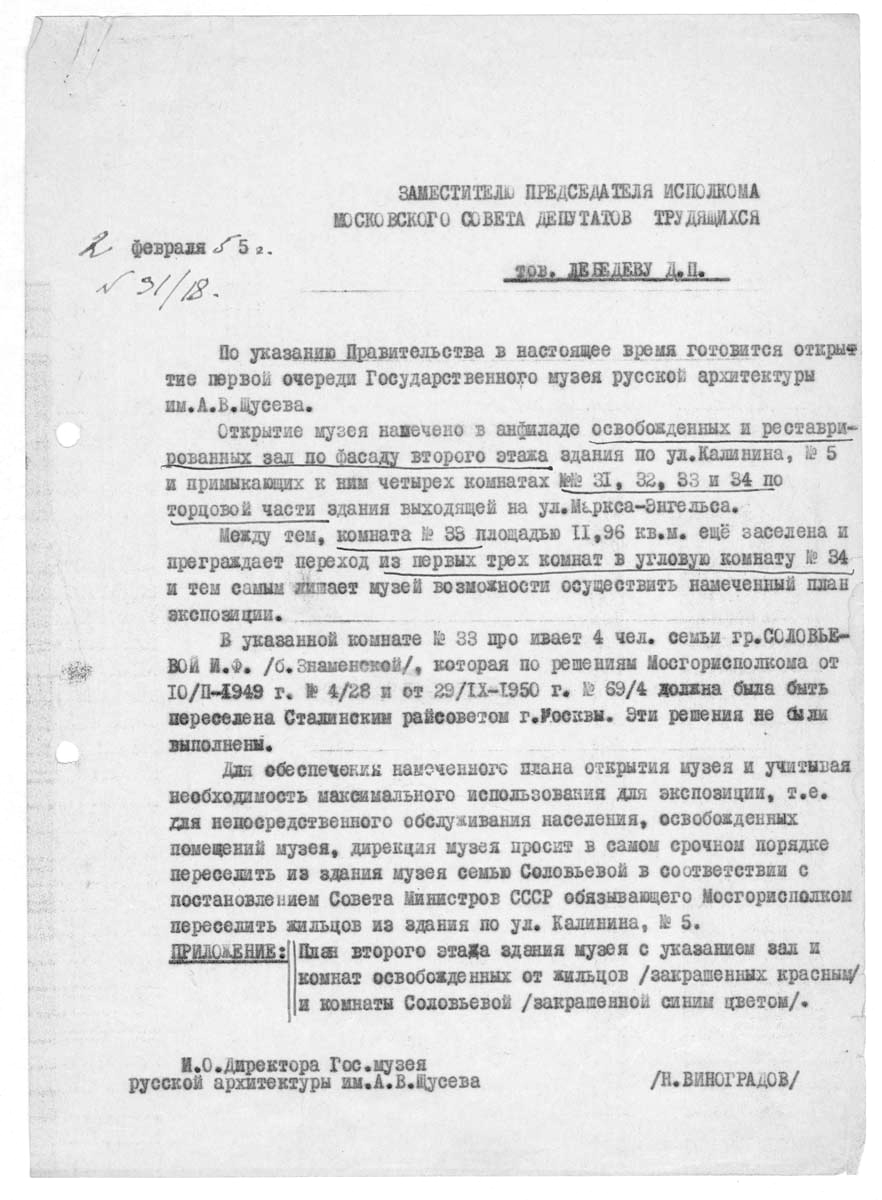
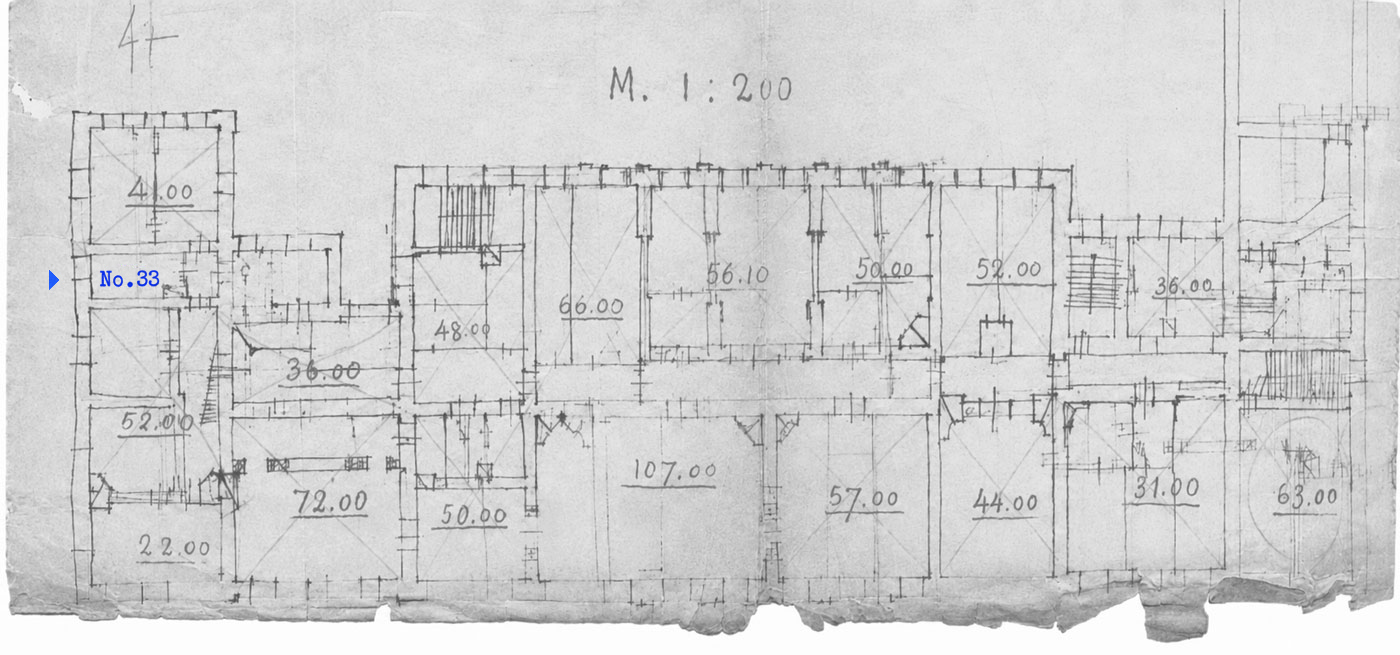
The photographs led us further into the museum’s archives, where we discovered a letter ordering the eviction of one of the families from the room they occupied—a room that stood on the way of the new Museum’s first exhibition. Thereby these remarkable documents became the starting point for our work.
ru en
﹡﹡﹡

“…through the determination and energy of Academician of Architecture Alexei Viktorovich Shchusev, whose bronze bust you can see here in this hall. Opposite us, by the window, is tovarisch Solovyova, who lives here with her family. Good morning, Irina Fyodorovna!”
“Good morning, tovarischi,” said the middle-aged woman, looking up from her book. She gave her customary nod and, ignoring the visitors’ tentative greetings, returned to her reading:
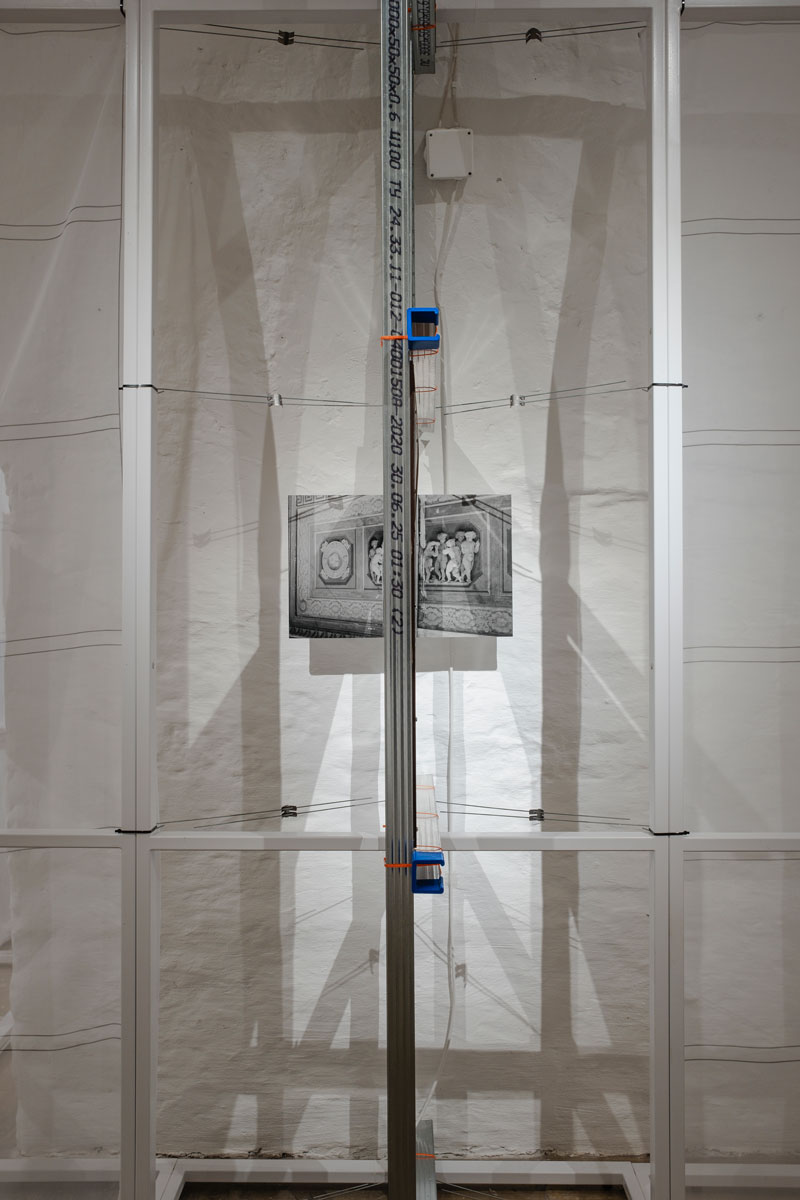
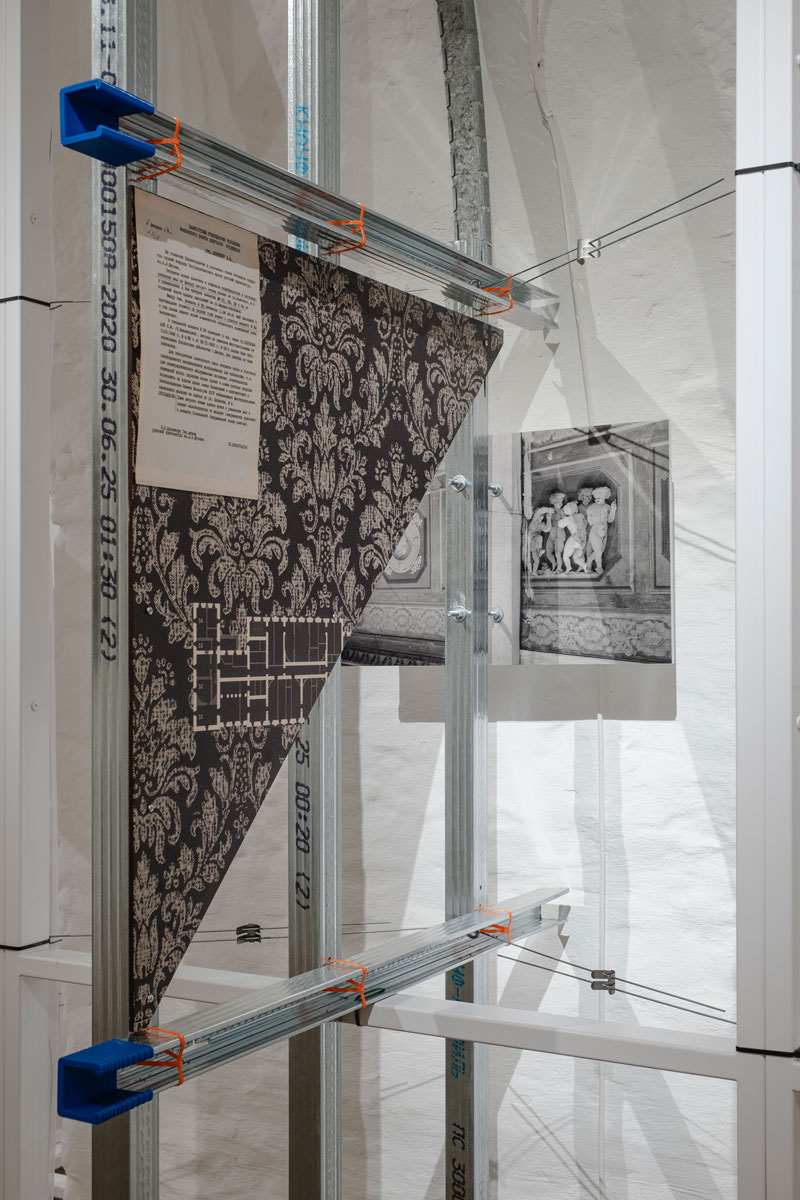
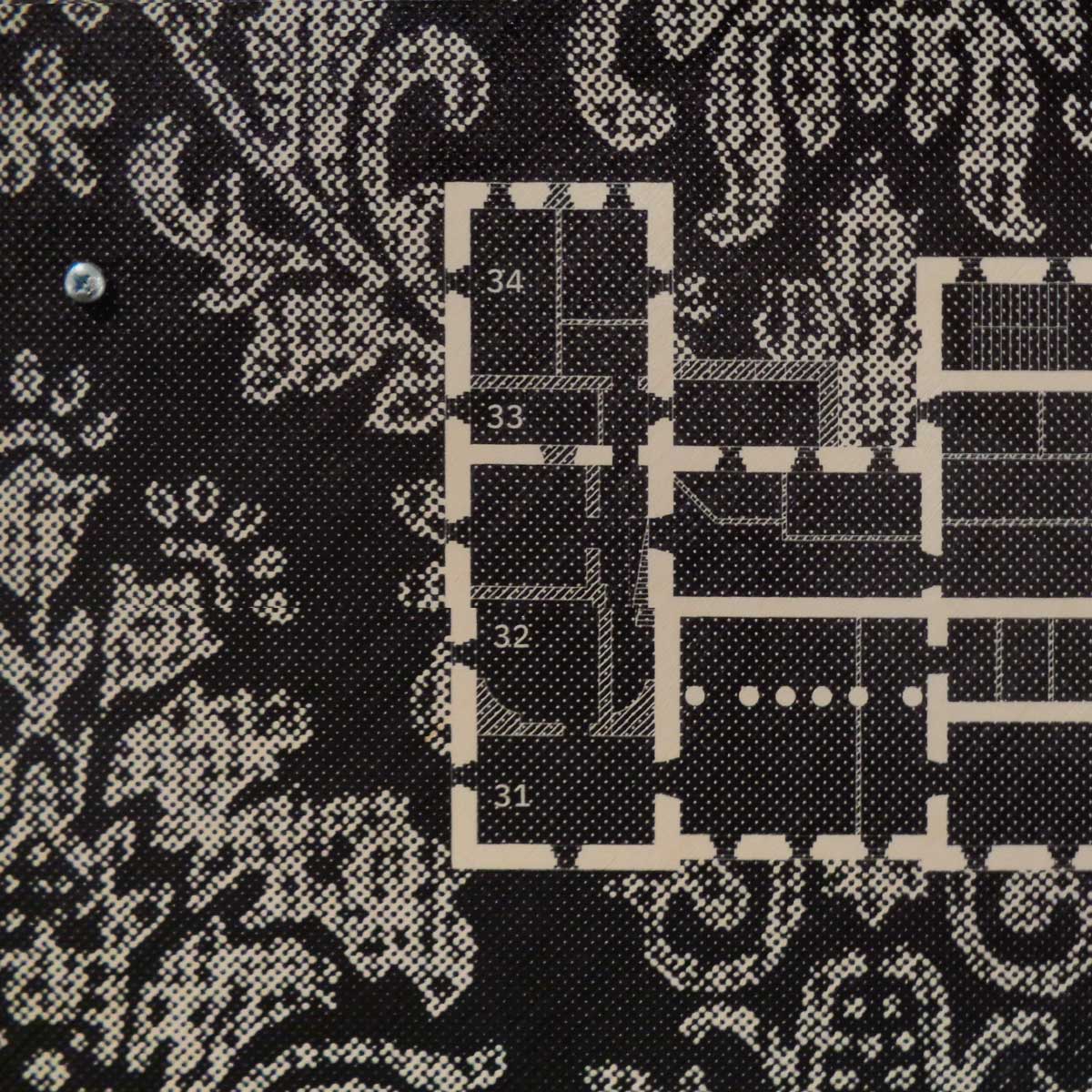
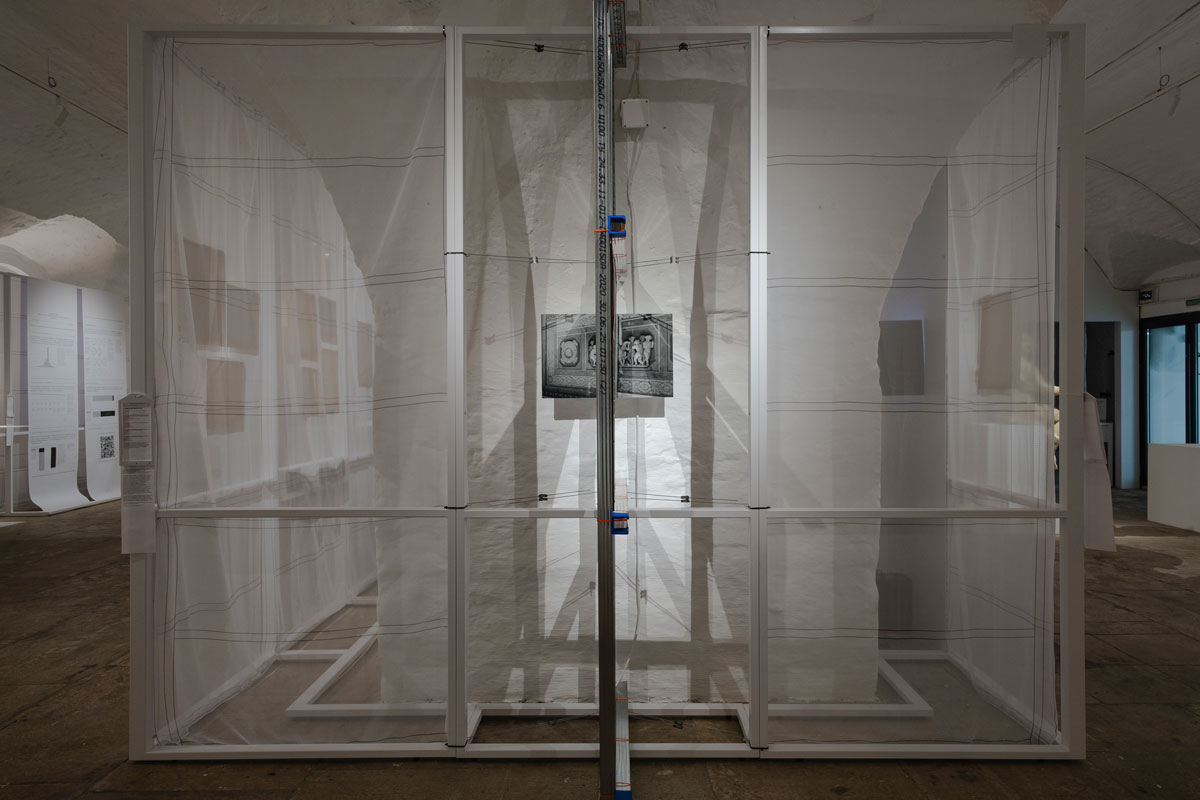
…to bring to light the authentic experience of the past—that which lies concealed behind the collection, the catalogue, the accession number. To preclude the possibility of its subsequent archival processing and transformation into a Unit of Storage, the chosen formal language is deliberately neutral and schematic. This same language allows us to overcome the stage-set effect of exhibition design: the pragmatic banality of an interior partition, made of contemporary materials using a simple and readily available construction method. This wireframe phantom is a fragment of another, earlier typology within the exhibition hall—a fragment adapted to serve a temporary display. One might call it an indifferent object, were it not for its ability to turn from background into subject, from marginalia into the main text, engaging the surrounding storage units into the typological aura of communal housing. The Collection enters the home. The field of the Collection, whose transgressive nature we examined in the preceding chapter, is a reflection of the field of History: it expands along the plane of the horizon and has no end. At times, pauses appear within this field, lacunae of individual memory—such as Room No. 33, occupied, together with her family, by Comrade…
“…Irina Fyodorovna,” the guide’s voice came up, “we shall be leaving you now. Until tomorrow!”
“Yes, yes… good day, tovarischi.”

﹡﹡﹡

“...through the determination and energy of Academician of Architecture Alexei Viktorovich Shchusev, whose bronze bust you can see here in this hall. Opposite us, by the window, is tovarisch Solovyova, who lives here with her family. Good morning, Irina Fyodorovna!”

“Good morning, tovarischi,” said the middle-aged woman, looking up from her book. She gave her customary nod and, ignoring the visitors’ tentative greetings, returned to her reading:

“...to bring to light the authentic experience of the past—that which lies concealed behind the collection, the catalogue, the accession number. To preclude the possibility of its subsequent archival processing and transformation into a Unit of Storage, the chosen formal language is deliberately neutral and schematic. This same language allows us to overcome the stage-set effect of exhibition design: the pragmatic banality of an interior partition, made of contemporary materials using a simple and readily available construction method. This wireframe phantom is a fragment of another, earlier typology within the exhibition hall—a fragment adapted to serve a temporary display. One might call it an indifferent object, were it not for its ability to turn from background into subject, from marginalia into the main text, engaging the surrounding storage units into the typological aura of communal housing. The Collection enters the home. The field of the Collection, whose transgressive nature we examined in the preceding chapter, is a reflection of the field of History: it expands along the plane of the horizon and has no end. At times, pauses appear within this field, lacunae of individual memory—such as Room No. 33, occupied, together with her family, by Comrade...”

“...Irina Fyodorovna,” the guide’s voice came up, “we shall be leaving you now. Until tomorrow!”

“Yes, yes... good day, tovarischi.”

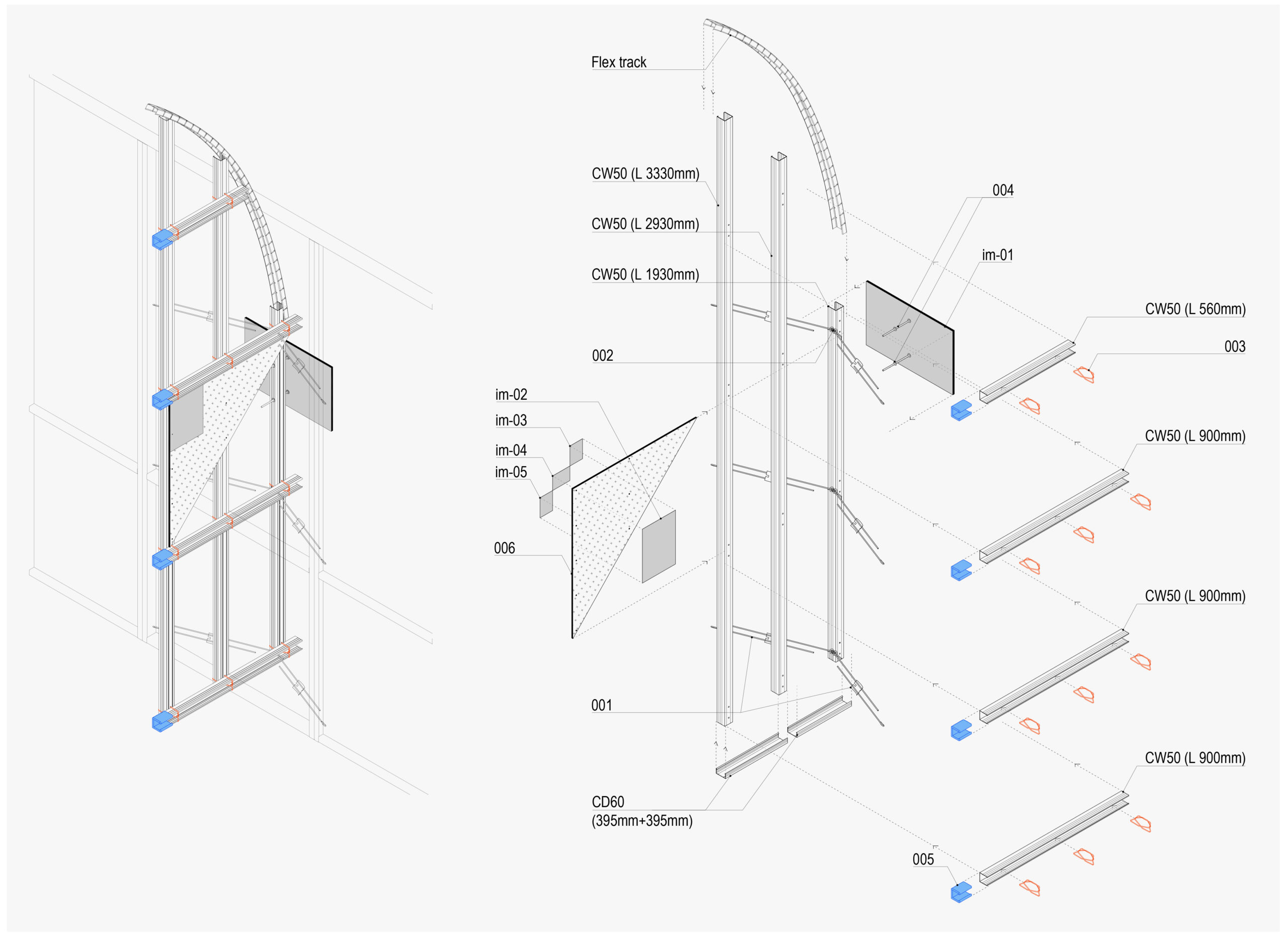
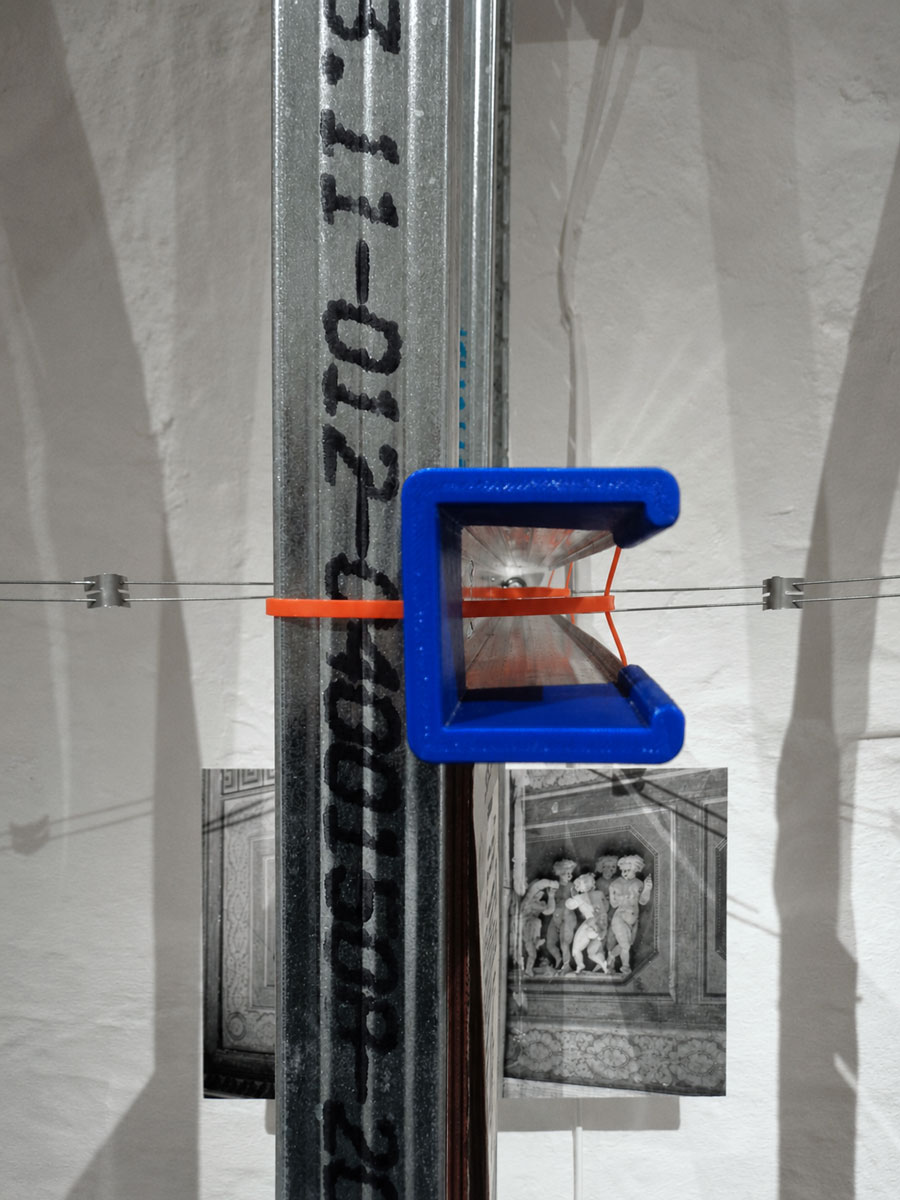
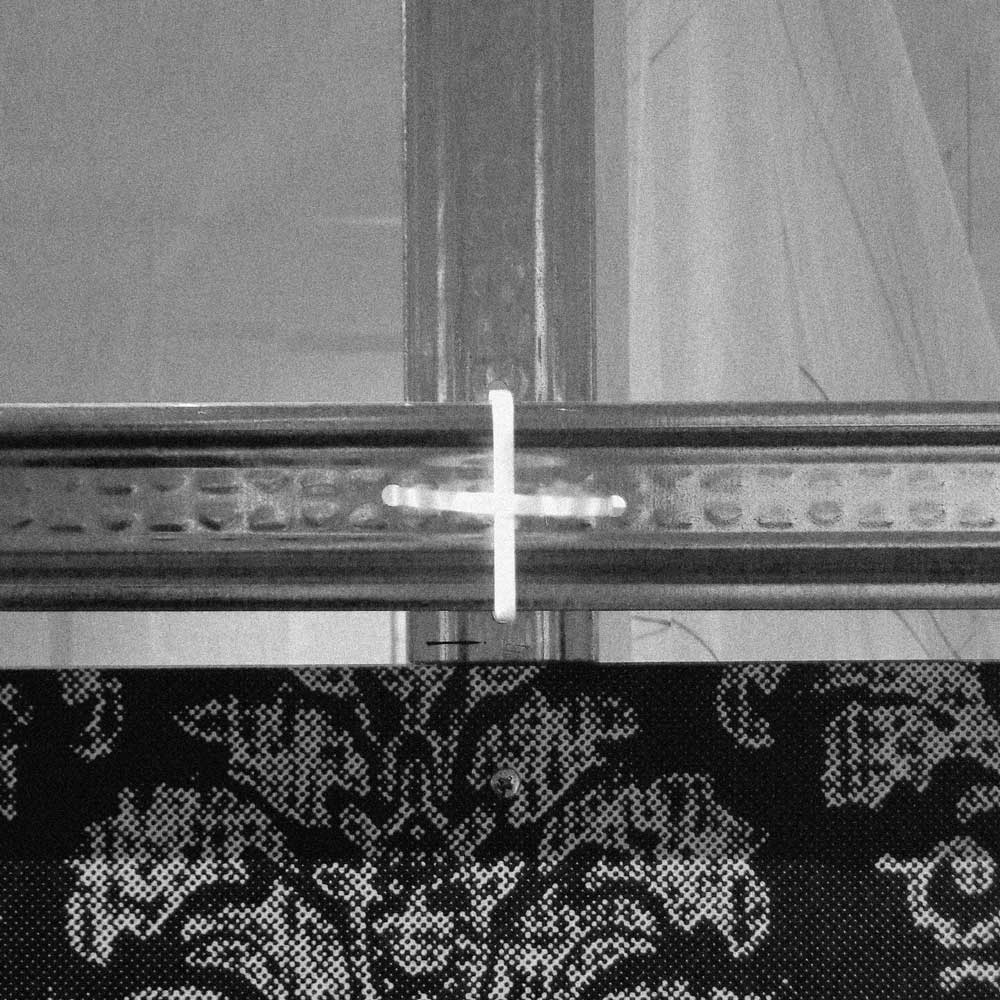
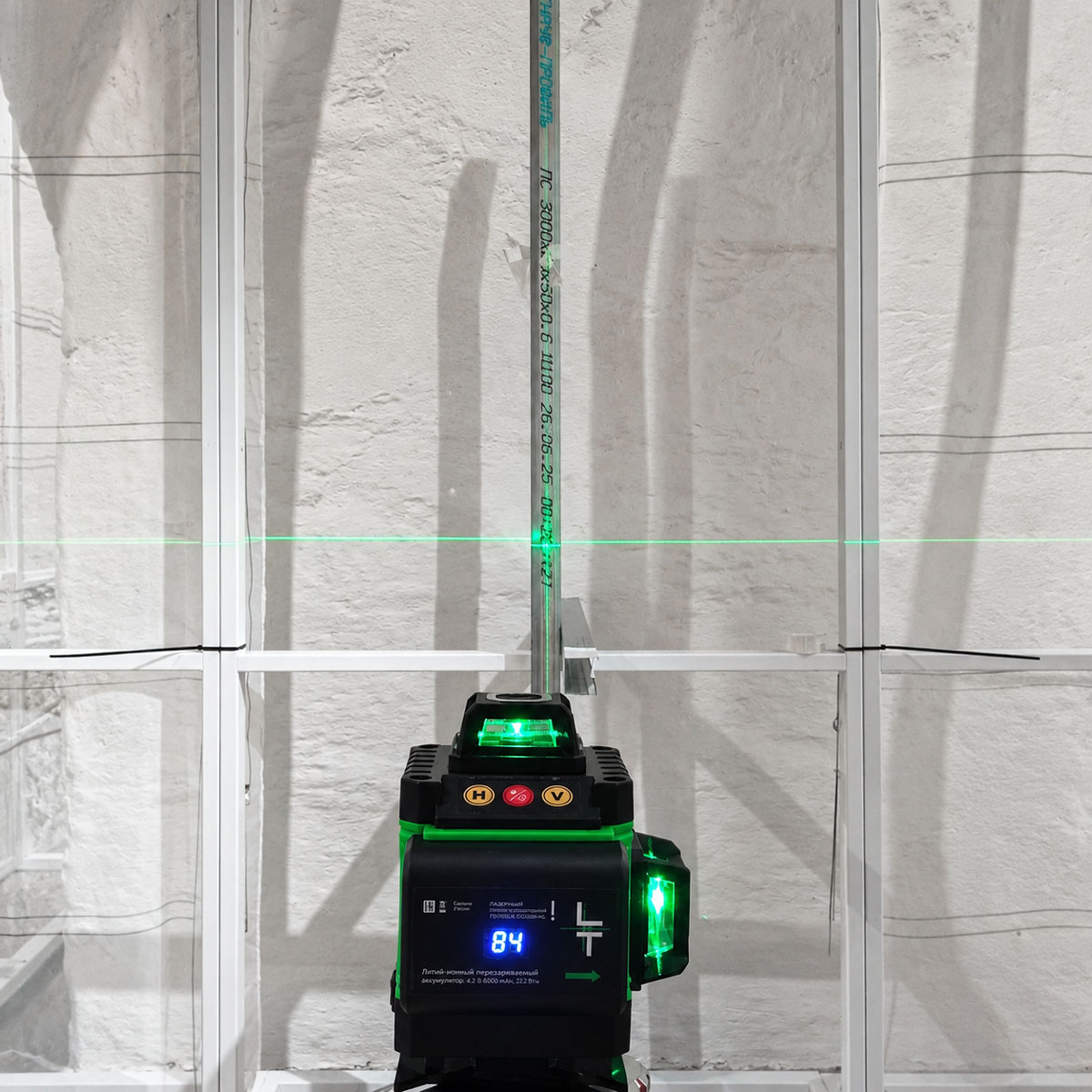
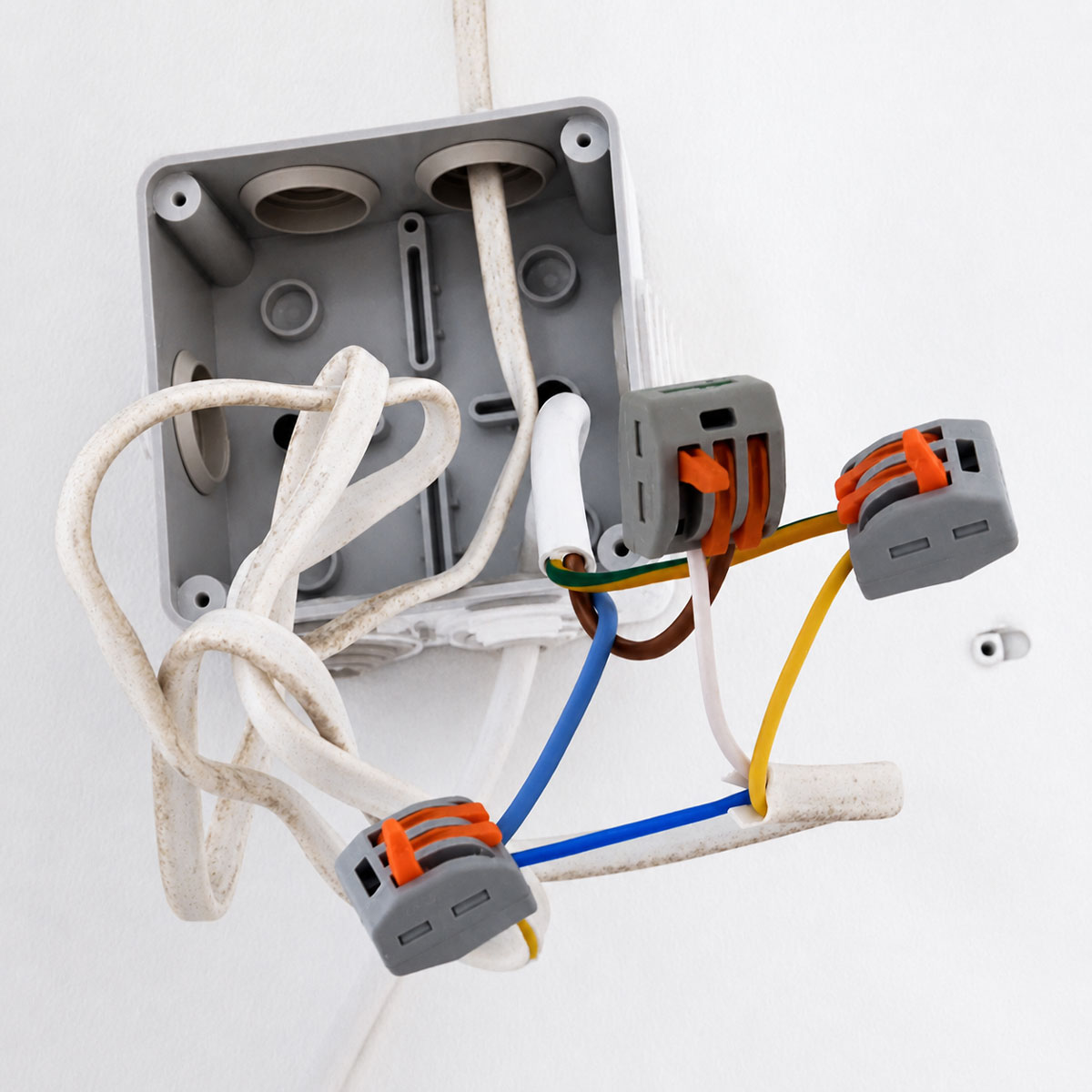
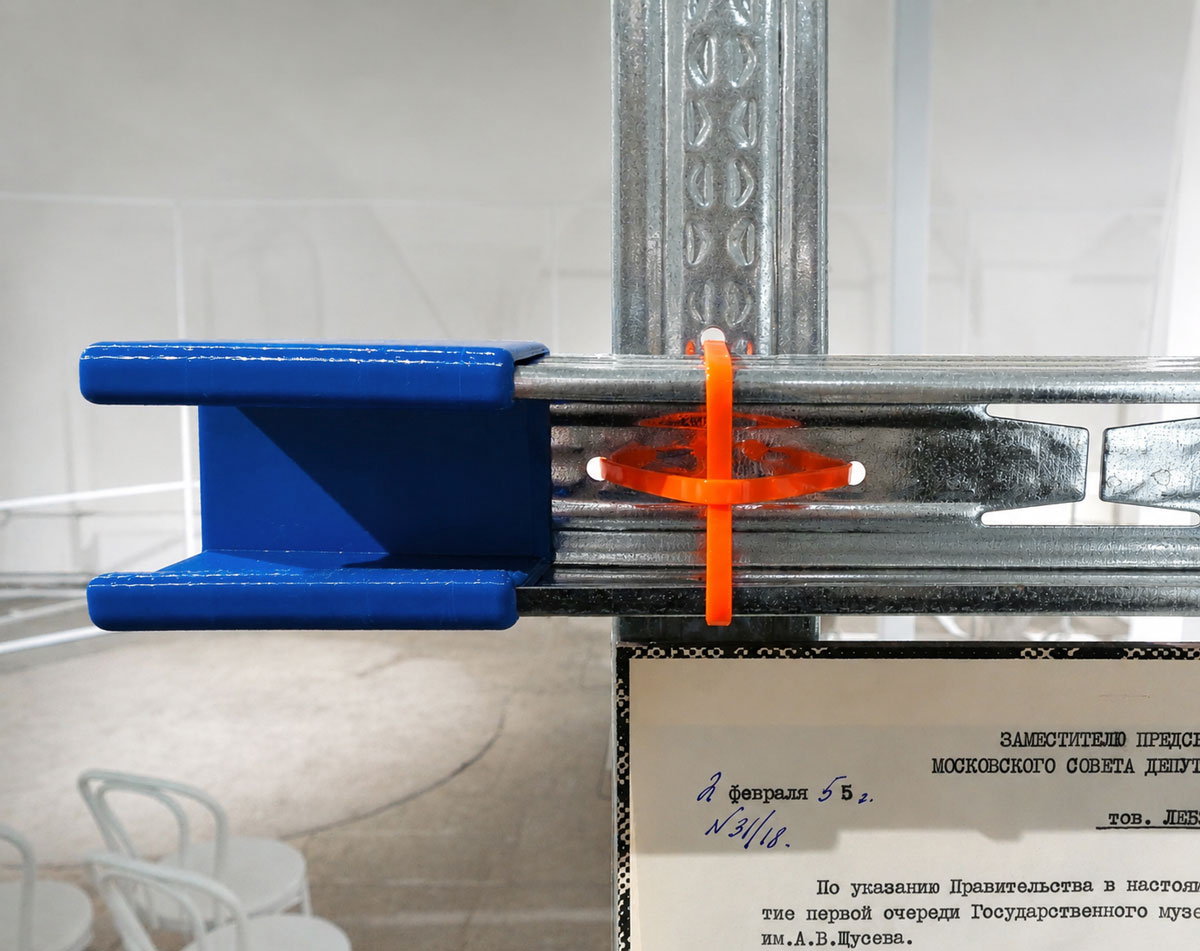
001. Plasterboard ceiling hanger; 002. Eyebolt; 003. Cable ties; 004. Stud; 005. Protection PVC element; 006. Plywood sheet with a wallpaper pattern printed.
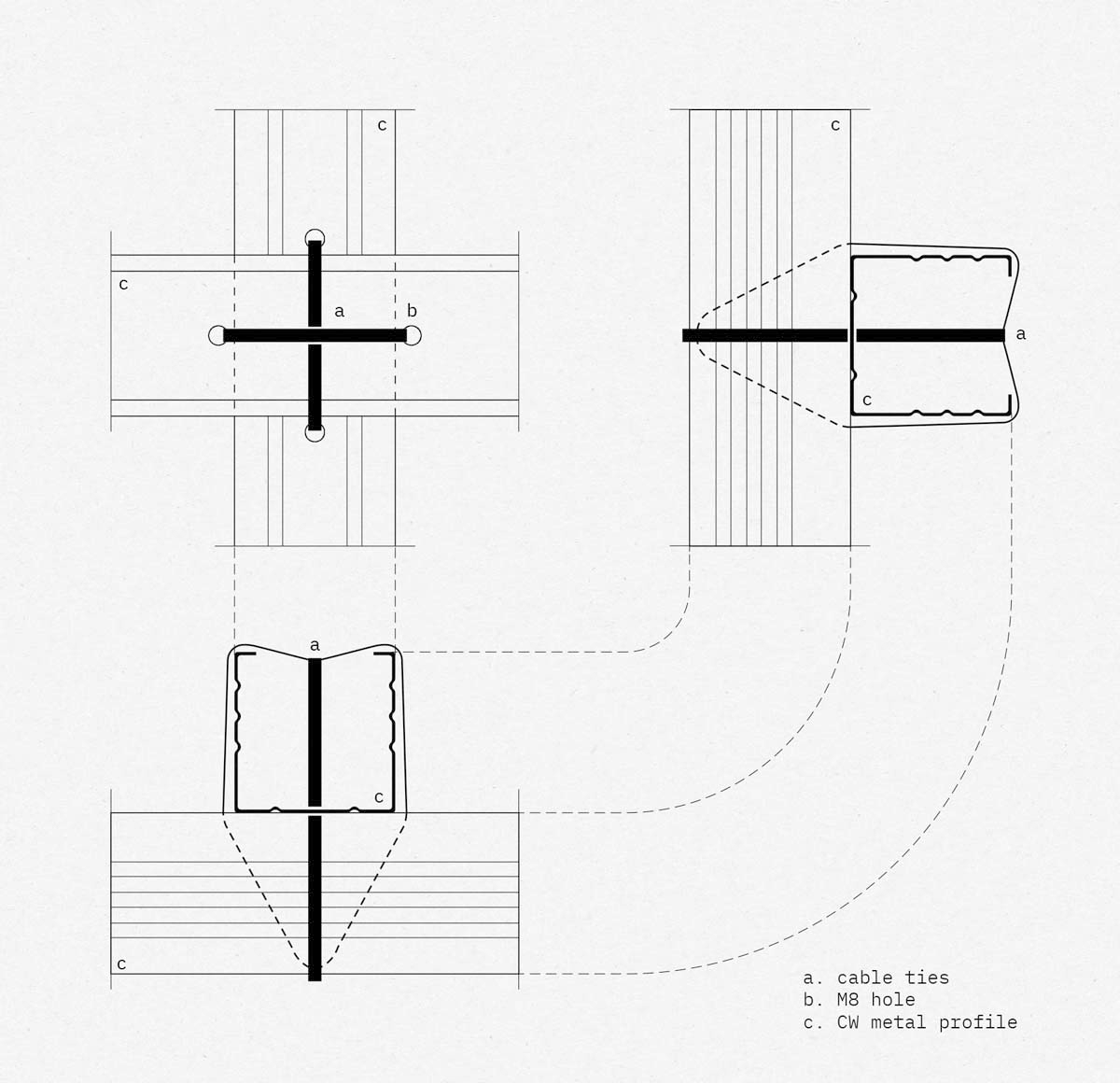
The guidelines of the exhibition space did not allow for rigid fixing to the floor, the historic brick walls, vaults, or the free-standing white painted metal framework. The profile elements were therefore connected to one another and to the exhibition structure using several types of joints based on plastic cable ties.
﹡﹡﹡

CURATION: Natalia Mastalerzh, Yulia Staborovskaya-Ardabievskaya, Varvara Alyoshina, Lola Khrunova, TCEH community.
PRODUCTION: Shchusev Museum of Architecture
CONTRIBUTORS: Sergei Mishin, Vladimir Petrosyan, Liza Vladimirova, Evgenia Repina, Sergei Malakhov, Konstantine Boudarine, vol`naya, Maria Katchalova (Aurore), KOSMOS, CHVOYA, Gorlenko Studio, KATARSIS, CITIZENSTUDIO, Maria Serova, Ilya Gotlieb, ARCHIVES.Legkov Markosyan, Yulia Nemova, Olga Konyukova (TLP), Anton Kalgaev, Saga, хώρα, NOWADAYS office.

﹡﹡﹡

CURATION:
Natalia Mastalerzh, Yulia Staborovskaya-Ardabievskaya, Varvara Alyoshina, Lola Khrunova, TCEH community.
PRODUCTION:
Shchusev Museum of Architecture
CONTRIBUTORS:
Sergei Mishin, Vladimir Petrosyan, Liza Vladimirova, Evgenia Repina, Sergei Malakhov, Konstantine Boudarine, vol`naya, Maria Katchalova (Aurore), KOSMOS, CHVOYA, Gorlenko Studio, KATARSIS, CITIZENSTUDIO, Maria Serova, Ilya Gotlieb, ARCHIVES.Legkov Markosyan, Yulia Nemova, Olga Konyukova (TLP), Anton Kalgaev, Saga, хώρα, NOWADAYS office.